Reading options: Normal

Count your mantra

A gentle counter for your own chanting. Tap once for each repetition, or press the space bar. One full round is 108.

Take a slow breath, then begin.

Rounds completed: 0
Krishna playing the flute beside Radha under a tree by a lotus river at golden hour, illustrated

ॐ नमो भगवते वासुदेवाय

good morning

Begin the day with a quiet mantra

Sanskrit mantras with their meaning in plain English and calm recordings to listen to. Start with Om Namo Bhagavate Vasudevaya below, then explore the morning palm verse and more. Nothing to buy and nothing to prove, only a slow breath and a few words worth knowing.

Start here

Krishna playing the flute beside Radha under a tree by a lotus river at golden hour, illustrated

to begin with

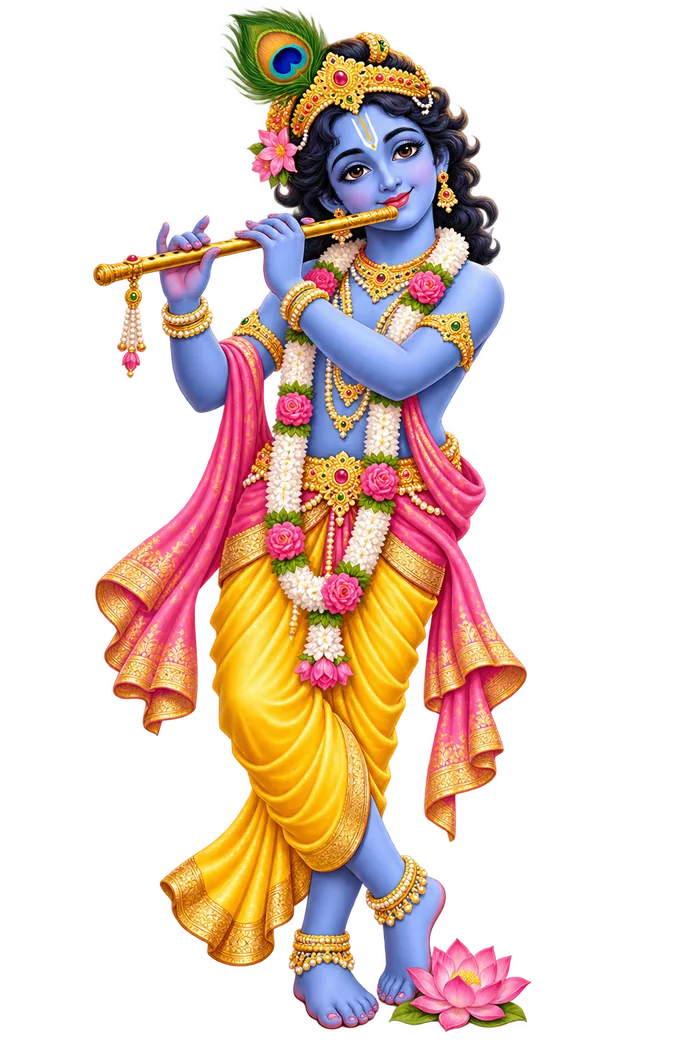
Om Namo Bhagavate Vasudevaya

Full meaning, word by word →
ॐ नमो भगवते वासुदेवाय
Om namo bhagavate Vāsudevāya

Meaning: “Om. I bow to Bhagavan Vasudeva.” Vasudeva is a name of Krishna and of Vishnu, often explained as the one in whom all beings dwell and who dwells in all beings.

It is known as a twelve-syllable mantra of Vishnu and is described in the Bhagavata Purana. People chant it slowly as a quiet act of devotion, and it is easy to follow because it is short and has a steady rhythm.
Om Namo Bhagavate Vasudevaya About two minutes

Kara Darshana: the morning palm verse

Kara Darshana · Karagre Vasate About two minutes · the verse is recited four times
कराग्रे वसते लक्ष्मीः
करमध्ये सरस्वती ।
करमूले तु गोविन्दः
प्रभाते करदर्शनम् ॥
Karāgre vasate Lakṣmīḥ,
karamadhye Sarasvatī,
karamūle tu Govindaḥ,
prabhāte kara-darśanam.

What it says

Full meaning, word by word →

At the tips of the fingers lives Lakshmi, in the middle of the palm Saraswati, and at the base Govinda. So at dawn, look at your palms.

Traditionally the three stand for what we hope to carry into the day: prosperity earned with honest effort, clear learning, and steadiness. The verse is a reminder that the hands we start the day with are the ones that will do the day's work.

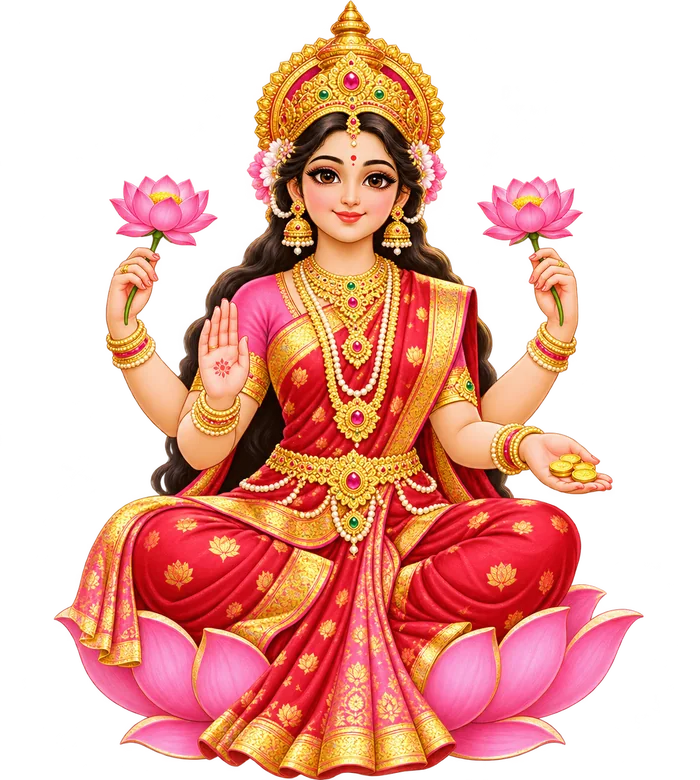
Lakshmi, illustrated

Lakshmi

at the fingertips
कराग्रे वसते लक्ष्मीः

Associated with prosperity and gratitude. The fingertips remind us that what we have comes through what we do.

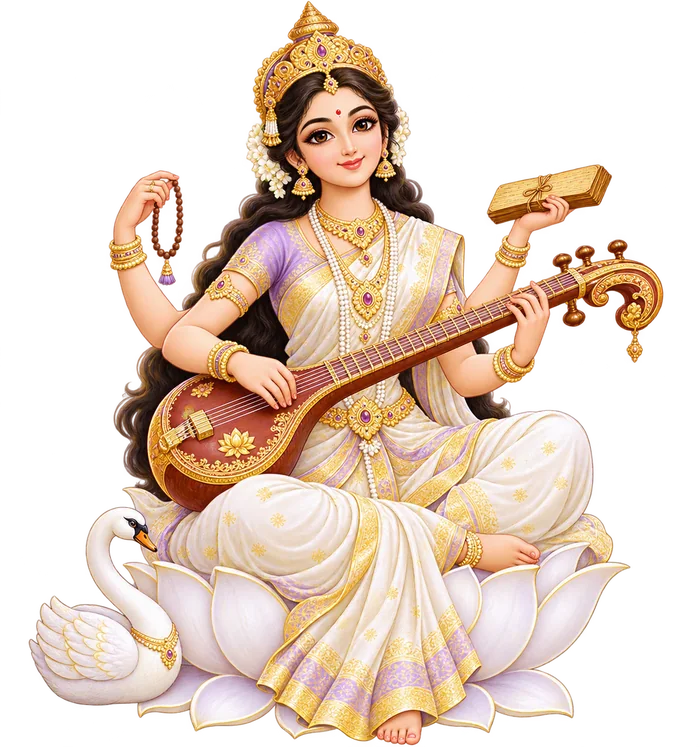
Saraswati, illustrated

Saraswati

in the middle of the palm
करमध्ये सरस्वती

Associated with learning, speech and clear thought. The centre of the palm holds the wish to understand.

Govinda, illustrated

Govinda

at the base of the palm
करमूले तु गोविन्दः

A name of Krishna, associated with steadiness and protection. The base is the support the rest of the hand rests on.

A two-minute morning practice

There is no single correct way. Many people do it like this:

  1. Before getting out of bed, open your eyes and rest your hands in front of you, palms up and slightly cupped.
  2. Look at the fingertips, then the middle of the palm, then the base, saying each line quietly.
  3. Recite the verse, or listen to the recording above and say it with it.
  4. Finish by gently rubbing your palms together and touching them to your face.

Pronunciation tip

Say the long “ā” like the “a” in father: kā-rā-gre. The final “ḥ” is a soft breath after the vowel, so Lakṣmīḥ sounds like “Lak-shmee-hi”. Go slowly. The rhythm is more important than speed.

More mantras

Another short mantra with its meaning and a recitation. Listen as you are, and chant along if you like.

Shiva and Parvati seated together by a lotus lake at sunrise with snow mountains behind, illustrated

for a quiet moment

Om Umamaheshvarabhyam Namah

Full meaning, word by word →
ॐ उमामहेश्वराभ्यां नमः
Om Umāmaheśvarābhyāṁ namaḥ

Meaning: “Om. Salutations to Uma and Maheshvara.” Uma is Parvati and Maheshvara is Shiva, honoured here together as one divine couple.

Many people see the pair as a picture of balance and togetherness, and chant the mantra when they want to be calm and thankful for the people close to them. It is a mantra of respect, offered without asking for anything in return.

Om Umamaheshvarabhyam Namah About three and a half minutes

a small note

About Mantrasaar

Mantrasaar is a quiet corner for morning mantras: the words, what they mean, and a calm recitation to sit with. I'm building it slowly, one verse at a time, so each one gets its meaning explained properly.

Nothing here promises wealth, health or any particular result. These are old verses for starting the day in a gentler way.

How it is made: the artwork and the music are created with AI tools and then arranged and edited by me. The Sanskrit text is a traditional verse. If you spot a mistake in a translation or pronunciation, I would genuinely like to hear it so I can fix it.

— the person behind Mantrasaar